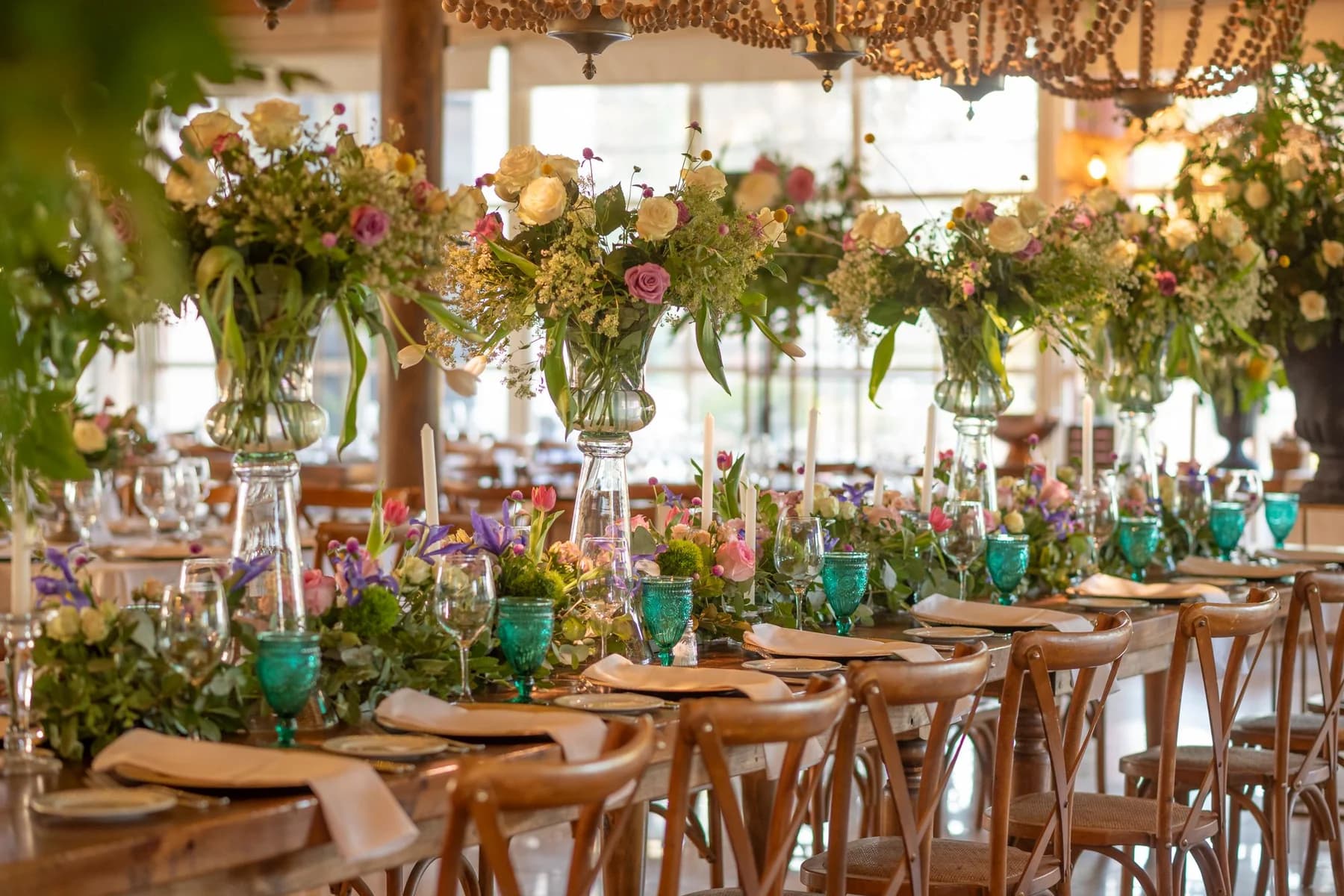
What will weddings look like in 2027? The first substantial forecasts point away from one compulsory aesthetic. Couples are designing for comfort and connection, then using colour, fashion and personal details to make that experience unmistakably theirs. The result is less like a styled set and more like an excellent party with a clear point of view.
This guide draws on Bridebook's 2027 forecast, the 2027 collections shown at Barcelona Bridal Fashion Week and current commentary from wedding designers. Use it as a filter, not a shopping list. A useful trend should solve a problem, work with the venue or tell a true story about the couple.
1. Personal micro-details replace rigid themes
Bridebook calls the leading 2027 direction “whimsy”: playful, joyful details rather than a ready-made décor package. Think handwritten table names, a dessert from a family recipe, the dog appearing on place cards or a cocktail named after the city where you met. One precise detail often says more than a room full of monogrammed objects.
List shared places, tastes, stories and phrases, then choose only three. Spread them across the ceremony, table and music. Guests should discover a story, not solve a decorative puzzle.
- Choose three true stories, not ten fashionable props
- Explain details that guests may not recognise
- Repeat one motif in no more than two or three places
2. Fewer attractions, a better guest experience
In 2027, bigger is no longer automatically better. Couples are dropping crowded entertainment schedules and spending on food, seating, transport, temperature and music that still allows conversation over dinner.
Walk through the day as a guest, from the invitation to the late-night journey home. Long queues, missing directions and uncomfortable pauses matter more than another photo backdrop. Water, clear timing and a quiet seat for older relatives rarely look spectacular, yet people remember them.
- Remove queues and information gaps first
- Keep one social activity and one surprise
- Check comfort and accessibility for every generation
3. 2027 wedding colours: layers beyond total beige
Neutrals remain useful, but no longer carry the whole design. Powder blue, butter yellow, muted pink, cherry, plum, green and warm earth shades appear in layered palettes. One colour in three values, plus a small contrasting note, feels more considered than an unstructured rainbow.
Start with the room. Timber, carpet, curtains and light are already part of the palette. View samples of fabric, paper, glass and flowers together in daylight and evening light before ordering at scale.
- Use one hue at several levels of saturation
- Add contrast through glass, ribbon, candles or one flower
- Treat the venue's permanent finishes as colours
4. Sculptural flowers, mono arrangements and negative space
Florals are becoming directional and airy rather than identical tight domes. Mono-flower arrangements, branches, fruit and purposeful empty space create impact while keeping sightlines open.
Concentrate the budget in three frames: arrival, ceremony and one reception focal point. Move ceremony pieces afterwards and ask for the strongest local varieties in season. Shape, scale and light can matter more than the number of stems.
- Ask what grows well in your wedding month
- Plan how ceremony flowers will be reused
- Protect conversation and space for shared dishes
5. Long, curved and family-style tables
Long tables, soft curves and smaller dinner-party groups make a reception feel communal. A serpentine layout is not right for every room; service routes, wheelchair access and sightlines must come before the photograph.
Request a measured floor plan, not only a rendering. Mark chairs when pulled out, exits, toilets, the dance floor and the band's equipment. For very long tables, help guests find the correct section as well as the table.
- Plan movement before styling
- Mix table shapes when the room asks for it
- Use a clear seating plan and named place cards
6. A personal ceremony becomes the heart of the day
Growing interest in celebrant-led ceremonies reflects a desire for a more meaningful opening. Even within a legal or religious structure, music, readings, a short shared story and thanks to loved ones can make the ceremony sound like the couple.
Do not hand the emotional core to a generator. AI can organise memories or a rough draft, but read every final word aloud. A specific scene is stronger than a page of adjectives, and all personalisation must respect the requirements of the officiant and location.
- Use one concrete memory
- Rehearse aloud and remove unfamiliar language
- Tell guests what to expect when the format is unusual
7. 2027 bridal fashion: movement, draping and changeable looks
Barcelona's 2027 collections point to freer silhouettes, strong draping, asymmetry, soft romanticism and expressive headpieces. Outfits are expected to move, not merely photograph well while still. Detachable sleeves, capes and overskirts can transform one look without a complete second outfit.
At fittings, sit, climb steps, lift your arms and dance. The trend only works if it does not need adjusting every few minutes. Tailoring can tell the same story through colour, texture and one accessory echoed elsewhere in the design.
- Test every outfit in motion
- Consider one transforming element
- Let a headpiece, cape or jewellery become the focal point
8. Food and cake join the design story
The menu is no longer separate from the visual plan. A cake can echo a dress drape or paper texture, while a local ingredient can connect dinner with the setting or family history. A shorter menu served consistently often beats several forgettable stations.
Collect dietary needs through RSVP and ask how the kitchen labels and separates meals. For sculptural cakes, confirm refrigeration, display time and who will cut them. Form should never compromise taste or safety.
- Give one seasonal ingredient a meaningful role
- Collect allergies as structured answers
- Connect the baker and stylist before final sign-off
9. A wedding content creator alongside, not instead of, photography
Phone-shot vertical video and next-day delivery have become a distinct service. A content creator captures reactions and behind-the-scenes clips, but does not replace professional photography or film. A clear division of roles stops three people competing for the aisle during the vows.
Agree delivery, raw files and publishing boundaries. If you skip the supplier, give one trusted guest a five-shot list. Fast content still requires consent, especially around children and guests who do not want to appear online.
- Define clips, raw files and delivery time
- Introduce all image-makers before the wedding
- Agree what can be published and when
10. AI works backstage while the couple's voice stays human
AI can compare notes, group tasks, draft venue questions, translate practical information and summarise RSVP data. It is useful for getting past a blank page, but it should not manufacture the couple's story, vows or final decisions.
Never paste identity documents, payment data or a full guest list into an unknown tool. Verify generated facts against contracts and suppliers, particularly for formalities, allergies and timings. Automate organisation, not emotion or responsibility.
- AI: lists, drafts, summaries and working translations
- People: contracts, health, emotion and final communication
- Check every generated fact at its source
11. Quiet technology: one website instead of chat chaos
The best wedding technology is almost invisible. One site can hold the schedule, maps, transport, rooms, dress code, named RSVP and a later gallery. Guests see one current source and the couple stops correcting five versions of the same message.
Publish confirmed facts first and add detail as contracts are signed. RSVP should ask each guest only relevant questions and offer a clear deadline. Keep a phone route for anyone who is less comfortable online.
- Maintain one current source of truth
- Use named RSVP rather than an unrestricted form
- Offer an offline contact route
12. What is going out in 2027? Décor without meaning
No particular colour, flower or neon sign has been banned. What feels tired is obligation: generic slogans, walls built for one photograph, beige that fights the venue, disposable dated favours and a schedule with no time to talk. Any of these can still work when it has a purpose or a genuine connection to the couple.
Use a three-question test: does it make something easier, say something true about us, and would we still like it without social media? Two yeses are enough. Trends are a vocabulary of possibilities, not rules that make every wedding look alike again.
- Limit disposable personalised objects
- Do not add attractions at the expense of dinner and conversation
- Check every trend against venue, budget and story
Frequently asked questions about 2027 wedding trends
What is the biggest wedding trend for 2027?
The strongest direction is a personal, relaxed celebration with fewer ready-made themes and more true stories, guest comfort and intentional details. Bridebook describes its playful side as “whimsy”, but it is not one décor style.
What wedding colours will be popular in 2027?
Expect powder blue, butter yellow, muted pink, cherry, plum, green and warm earth shades. A single colour in several tones with one small contrast feels particularly current.
What wedding trends are going out in 2027?
Overloaded entertainment, anonymous slogans, single-photo backdrops and disposable favours without a purpose are losing relevance. They still work when they tell a true story or improve the guest experience.
How can we use 2027 trends on a small budget?
Choose one lead idea and two supporting details. Reuse ceremony flowers, buy seasonally, reduce attractions and prioritise lighting, music, food and clear guest information.
How do we keep a fashionable wedding from dating quickly?
Build from the venue and your story, using trends as accents. Natural materials, good light, comfortable layouts and personal meaning age more slowly than copying a complete seasonal set.
The best 2027 trend is a consistent choice
A 2027 wedding can be colourful or quiet, intimate or large. The common thread is consistency: an atmosphere suited to the venue, a few personal signs and a plan guests can navigate easily.
Write down three priorities before opening another inspiration folder. Keep ideas that support one of them and fit the budget; leave the rest without regret.